
Polyoxin D
$701.10
- Description
- Additional information
Description
Polyoxin D
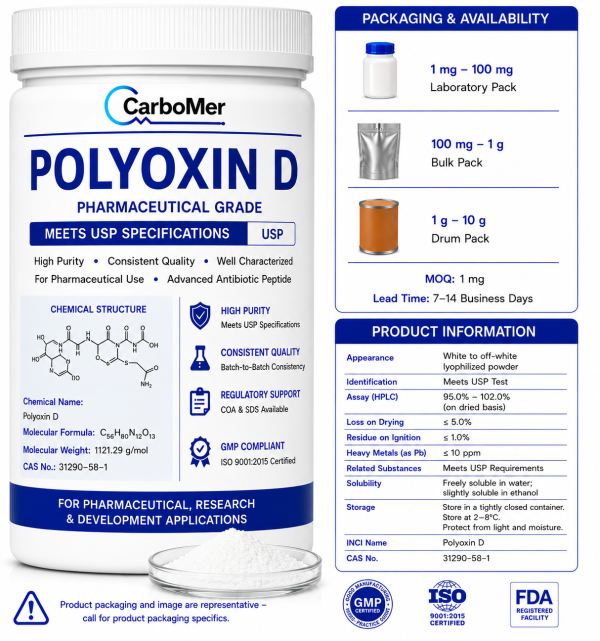
Polyoxin D is a nucleoside-peptide antibiotic and chitin synthase inhibitor used in agricultural fungicide development, antifungal research, analytical evaluation, and controlled formulation programs. It has the molecular formula C₁₇H₂₃N₅O₁₄, a molecular weight of approximately 521.39 g/mol, and CAS Registry Number 22976-86-9. Polyoxin D is
• A Nucleoside-peptide antibiotic produced through microbial fermentation
• A competitive inhibitor of fungal chitin synthase
• Suitable for antifungal research, analytical work, agricultural formulation development, and qualified manufacturing programs
• Highly water-soluble material requiring appropriate storage and formulation controls
• Available separately from Polyoxin D Zinc Salt, which is a distinct regulated form
• Supported by technical and safety documentation for supplier qualification and internal review
Polyoxin D is a biologically derived compound associated with the Polyoxin family of antifungal antibiotics. It is produced through fermentation using Streptomyces cacaoi var. asoensis and acts by competitively inhibiting chitin synthase, an enzyme required for fungal cell-wall formation. By interfering with chitin production, Polyoxin D limits the ability of susceptible fungi to maintain normal growth and structural integrity.
The compound may be evaluated in agricultural research, fungicide formulation, fungal cell-wall studies, analytical method development, and other controlled scientific programs. Research has shown that Polyoxin D inhibits fungal chitin synthase enzymes, although activity may vary by fungal species, enzyme isoform, test conditions, and compound concentration. Its suitability for a specific target organism or formulation should therefore be established through controlled efficacy, compatibility, and stability studies.
Polyoxin D should not be confused with Polyoxin D Zinc salt. The Zinc salt is a separate registered active ingredient that has been used in fungicide products for turf and lawn applications. The United States Environmental Protection Agency describes the zinc salt as a formulation approach that improves residence time on plant surfaces because uncomplexed Polyoxin D is highly water soluble. Customers should confirm whether their program requires Polyoxin D, Polyoxin D Zinc salt, an analytical reference material, or another polyoxin preparation before requesting a quotation or placing an order.
For organizations looking to buy Polyoxin D, supplier qualification should extend beyond price and immediate availability. A qualified Polyoxin D supplier should provide an unambiguous chemical identity, CAS Registry Number, assay or purity value, fermentation or manufacturing information where available, analytical methods, chromatographic data, water content, related substance limits, storage conditions, and applicable safety documentation. Because polyoxin materials may be supplied as a free compound, salt, mixture, technical concentrate, or reference standard, the current specification and Certificate of Analysis should be reviewed carefully before purchase.
CarboMer approaches Polyoxin D sourcing with a regulation-first and manufacturing-centered perspective. Research teams benefit from a supplier that can support identity confirmation, analytical evaluation, biological assay planning, and repeat purchasing. Quality professionals require traceable lot documentation and clearly defined acceptance criteria. Procurement teams need confidence that the supplied form, purity, and documentation match the intended research, agricultural, or development application.
When customers purchase Polyoxin D, the intended use and destination market should be reviewed before release. Agricultural and pesticidal applications may require product registration, approved labeling, permitted use sites, residue or tolerance evaluation, and other jurisdiction-specific authorizations. The regulatory status of Polyoxin D Zinc salt does not automatically establish approval for Polyoxin D itself, a different formulation, a different crop, or a different use pattern.
The material is supported by standard technical documentation, including a Certificate of Analysis, Safety Data Sheet, and related product information where applicable. Available analytical methods, impurity limits, microbiological controls, storage requirements, retest periods, and regulatory statements should be confirmed for the individual grade. Batch-to-batch consistency, traceability, and controlled handling remain central to dependable sourcing and downstream research or formulation performance.
Polyoxin D should be handled by trained personnel using appropriate laboratory or manufacturing controls. Personnel should review the current Safety Data Sheet and follow site-specific procedures for receiving, sampling, weighing, transferring, storage, and disposal. Storage conditions should follow the product label and supporting documentation, with protection from contamination, moisture, heat, and other environmental conditions that could affect material quality.
The material is packaged in appropriate containers selected to protect its integrity during storage, handling, and transportation. Packaging formats, minimum order quantities, availability, and lead times may be discussed according to analytical, research, agricultural development, and qualified manufacturing requirements.
As with all CarboMer products, customers receive responsive technical communication and documentation support intended to advance material qualification, analytical development, formulation evaluation, and long-term supply planning.
Additional information
| Weight | 0.001 g |
|---|---|
| Dimensions | 1 × 1 × 1 cm |